Monday, December 06, 2010

Junior Duck Stamp entries due in early 2011

The U.S. Fish & Wildlife Service enacourages K-12 students to share their art skills while learning about ducks by entering the 2011 Junior Duck Stamp competition. Most states' competitions have a March 15, 2011, deadline, but some states have much earlier deadlines, such as January. Check your state on this map to confirm its rules and deadline.

In addition to awarding national recognition and cash prizes ranging from $2,000 to $5,000 for artwork, the competition includes a conservation component. Students can submit a conservation message that "expresses the spirit of what they have learned through classroom discussions, research, and planning for their Junior Duck Stamp Contest entries." The first-place winner will receive a $500 cash prize.

The program also recognizes "the integral part teachers and parents play in education and the future of the youth of our Nation," so it provides the national winner, a parent or guardian, and the winner’s teacher with a free trip to Washington, D.C., for the First Day of Sale ceremony in late June/early July.

Labels: , ,

Sunday, October 17, 2010

Minnesota artist wins Duck Stamp contest for the fourth time

James Hautman of Chaska, Minn., earned top honors again in the annual Federal Duck Stamp Art Contest with his painting of two Greater White-fronted Geese. The judging and announcement took place Saturday at the David Brower Center in Berkeley, Calif.

Hautman's work bested more than 230 entries and will appear as the 2011-12 Migratory Bird Hunting and Conservation Stamp. He previously won the contest in 1989, 1994 and 1998.

Greater White-fronted Geese by James Hautman

The Duck Stamp sells for $15 and raises close to $25 million each year to provide funds that purchase wetlands and grasslands providing habitat for waterfowl and many species enjoyed by birders and other outdoor enthusiasts. Ninety-eight percent of the proceeds go to the Migratory Bird Conservation Fund.

Greater White-fronted Goose by Robert Hautman

Hautman's brother Robert of Delano, Minn., earned second place in the contest with his painting of a Greater White-fronted Goose. Robert Hautman won first place in two previous Duck Stamp art contests.

An acrylic painting of two Brant earned third-place honors for Kip Richmond of Apex, N.C. Eligible species for this year’s Federal Duck Stamp Contest were Brant, Canada Goose, Greater White-fronted Goose, Northern Shoveler and Ruddy Duck.

Brant by Kip Richmond

The judges included former California Secretary of Natural Resources Mike Chrisman; waterfowl biologist and professor John Eadie; wildlife artist Joe Garcia; retired U.S. Fish and Wildlife Service biologist Jerry Serie; and wildlife biologist and duck stamp expert Carlo Vecchiarelli. The alternate judge was Gary Kramer, an outdoor writer and photographer -- and WildBird contributor.

Labels: , ,

Friday, October 15, 2010

Duck Stamp art contest begins in Berkeley

Today marks the first time that the Federal Duck Stamp Art Contest will take place on the Pacific Coast. That Bay Area bastion of liberalism, Berkeley, serves as the site for the two-day public event that focuses on a stamp that hunters must purchase each year to shoot legally.

During its 61-year history, sales of the federal Duck Stamp have generated more than $700 million to purchase at least 5 million acres of habitat throughout the United States. From the $15 purchase, 98 percent of the proceeds go to Migratory Bird Conservation Fund to purchase acreage for the National Wildlife Refuge System. The protected wetlands and grasslands benefit waterfowl and many other groups of birds enjoyed by birders around the country.

At the David Brower Center on Friday and Saturday, visitors can see the artwork submitted by 235 wildlife artists throughout the nation. The winning art will appear as the 2011-2012 Federal Migratory Bird Hunting and Conservation Stamp. Visitors to the center also can participate in a "Pick the Winner" contest and children's activities while observing a wood carving demonstration. With the center as a starting point on Friday, participants can join a bird walk on the U.C. Berkeley campus with Golden Gate Audubon Society or a two-hour bus tour of three restoration projects with Ducks Unlimited. (Seating is limited for the latter, so RSVP to rspenst@ducks.org)


View Larger Map

Saturday's agenda includes more art viewing and judging, with a panel of art, waterfowl and philatelic experts serving as judges. The winner will be announced close to noon.

Before the announcement, visitors can join a bird walk at the Albany Mudflats and the Albany Bulb with Golden Gate Audubon Society or participate in a duck drawing workshop at Don Edwards NWR's Newark Slough Learning Center in Fremont.

Later events on Saturday will "Amazing Refuge Race II" at Don Edwards NWR Visitor Center in Fremont, where teams of five will use a GPS unit to reach sites with specific coordinates and perform certain tasks. Prior registration is required on Friday: 510-792-0222 ext. 363.

As part of National Wildlife Refuge Week, the schedule even offers a Sunday event: a birding picnic between 8:30 a.m. and 2 p.m. at Sacramento NWR with Altacal Audubon Society. The 2010 Duck Stamp gives you free entry; otherwise, you get to pay $3 per car. More details are available from Mike at 530-624-4777.

Labels: , ,

Thursday, September 16, 2010

Duck Stamp sales add to protected land in California

In the Golden State, the U.S. Fish & Wildlife Service will acquire more land after receiving funds from the Migratory Bird Conservation Commission. The money comes from the Migratory Bird Conservation Fund, which includes proceeds from the sales of the Migratory Bird Hunting and Conservation Stamp, known as the Federal Duck Stamp.

Other states also benefited from the MBCC's announcement on Wednesday. The California projects are:
* Humboldt Bay National Wildlife Refuge in Humboldt Bay County: Acquisition of 167 acres that will help the refuge’s management capability and allow for native plant restoration. This refuge includes coastal dunes, scrub forest and beachfront.

* Stone Lakes National Wildlife Refuge in Sacramento County: Acquisition of 104 acres to secure a corridor of wintering habitat for Tundra Swans, White-fronted Geese and various duck species.

* Tulare Basin Wildlife Management Area in Kern and Tulare counties: Acquisition of 1,250 acres to secure habitat protection and create a larger block of contiguous habitat with compatible land uses.

“The U.S. Fish and Wildlife Service is dedicated to wildlife and nature conservation,” said Interior Secretary Ken Salazar. “The North American Wetlands Conservation Act grants, the National Wildlife Refuge System and the Federal Duck Stamp are vital resources for waterfowl and wetland conservation, and these efforts are making a difference for wildlife habitats throughout our nation’s great outdoors.”

MBCC also approved $3 million in federal grants under the North American Wetlands Conservation Act for conservation projects in California that will protect, restore and enhance wetlands and associated habitats across the state. For more information about these projects, visit this site. You'll find more information about North American wetlands and waterfowl conservation at FLYways.us.

Since 1929, the Migratory Bird Conservation Commission has met several times each year to consider land purchases through the MBCF. In 1989, NAWCA added the grant program approvals to the commission’s responsibilities.

The Migratory Bird Conservation Commission includes Sen. Thad Cochran (R-MS) and Blanche Lincoln (D-AR), Rep. John Dingell (D-MI) and Robert Wittman (R-VA), Secretary of Agriculture Tom Vilsack and Environmental Protection Agency Administrator Lisa P. Jackson as well as state representatives as ex officio members who vote on projects located within their states.

Labels: , ,

Monday, June 28, 2010

More land for birds & other wildlife

The Migratory Bird Conservation Commission recently approved 35.7 million for refuge acquisitions and wetlands grants for migratory birds: $30.4 million for grants to conserve more than 319,000 acres of wetlands and associated habitats in the United States and Canada under the North American Wetlands Conservation Act and $5.3 million in Federal Duck Stamp funds to add more than 1,849 wetland acres to six refuges in the National Wildlife Refuge System.

The six refuges that will increase in size, thanks to the $15 purchase of the annual Duck Stamp, include Cache River National Wildlife Refuge in Arkansas, Stone Lakes National Wildlife Refuge in California, Edwin B. Forsythe National Wildlife Refuge in New Jersey, Silvio O. Conte National Fish and Wildlife Refuge in Massachusetts, Lower Hatchie National Wildlife Refuge in Tennessee, and San Bernard National Wildlife Refuge in Texas.

Labels: ,

Wednesday, June 23, 2010

June 25: first day of sale for new Duck Stamp

Mark this Friday on your calendar as your first opportunity to purchase the 2010-2011 Duck Stamp. The $15 stamp gives free access to national wildlife refuges from July 1 to June 30, and 98 cents of every dollar goes into a fund to purchase or lease wetlands and grasslands.

The new stamp depicts an American Wigeon, painted by Robert Bealle of Waldorf, Md. His artwork earned first place last fall at the Federal Duck Stamp Art Contest, held at the Patuxent Research Refuge in Laurel, Md.

Since 1934, each waterfowl hunter must purchase a Federal Migratory Bird Hunting and Conservation Stamp to legally hunt migratory waterfowl. Through stamp sales, more than $750 million has gone toward conserving more than 5.3 million acres that benefits waterfowl, other bird species and various wildlife. The stamp proceeds benefit birders as much as they do hunters.


Although many birders express anti-hunting sentiments, WildBird supports the practice of legal hunting that falls within the guidelines set by scientific wildlife management. Because hunters have contributed directly and enormously to habitat conservation for almost 80 years, we respect their contributions that aid the birds we enjoy so much. We sincerely hope that birders will purchase the stamp this year -- and in future years -- to directly contribute to more habitat conservation.

Labels: , , ,

Wednesday, June 09, 2010

Rare Bird Alert: Common Sense in Berkeley

An article in yesterday's San Francisco Chronicle, "Stamp contest could run afoul in Berkeley," looks at the conjunction of waterfowl hunters and the Bay Area's historically liberal residents when the Federal Duck Stamp Contest arrives in mid-October.

The national contest to paint the best duck or goose is highly anticipated, potentially career-making and usually ruffles a few feathers.

Which is why, for the first time in its 60-year history, the contest is being held in Berkeley, the place most likely to get its plumage in a bunch over the notion of shooting waterfowl.

"We want to reach out to nontraditional audiences," said Scott Flaherty, the spokesman for the U.S. Fish and Wildlife Service, which holds the annual event. "We want people to know that the single most important thing they can do to support wetland conservation is to buy a duck stamp."

The article includes the perspective of a local artist and the local chapter of National Audubon Society.
Wildlife conservationists point out that the program has also enabled the slaughter of millions of mallards, geese, grebes and other water-loving birds. Last year, the federal government sold 1.5 million duck stamps, valid for hunting in all 50 states. The bounty has created thorny ethical issues for bird lovers, who would rather see ducks in the air, not on the mantle.

"There's an uneasy alliance between hunters and environmentalists," said Berkeley wildlife artist Roger Hall, who grew up in the duck-hunting capital of Minnesota and plans to enter the contest. "But in essence, we both want the same thing. I eat animals, and I'd feel like a hypocrite to disparage others for the choices they make." [The emphasis is mine. ~akh]


Hall defended the shooting of waterfowl on grounds that the ecosystem is so unbalanced, with so few predators, that some wildlife would starve without intervention.

The Golden Gate Audubon Society was also unfazed by the stamp contest's bridgehead in Berkeley.

"Anything that supports conservation and raises public awareness, we support," said Mark Welther, the Audubon executive director. "We do not oppose hunting if it's done legally and backed by sound scientific wildlife management and good sportsmanship." [The emphasis is mine. ~akh]

WildBird readers likely have seen a mention or two of the Duck Stamp in previous issues. We want birders to become aware of the successful program and to support habitat conservation by buying the $15 annual stamps. Today, 98 cents of every dollar goes into a fund to purchase or lease wetlands and grasslands. It seems like a no-brainer to us.

We find it refreshing to encounter a Berkeley artist and an Audubon chapter's officer who share those down-to-earth views. We hope that more bird enthusiasts will let go of the unfounded disdain for waterfowl hunters, whose purchases of Duck Stamps since 1934 have paid for acres and acres of land that support birds and other wildlife -- to the benefit of birders across the country.

Labels: ,

Thursday, April 01, 2010

Duck Stamp as a discount coupon

A sports team recently promoted the Duck Stamp -- officially known as the Federal Migratory Bird Hunting and Conservation Stamp, shown below -- as a way to pay for half-price tickets at the box office. The Bowie Baysox, a class Double-A affiliate of the Baltimore Orioles baseball team, said the April 9 game against the Richmond Flying Squirrels will be Outdoorsman Night.

The Baysox are making it easy for hunters, crabbers and fisherman to get into the game with a special ticket offer. Any fan who brings a hunting, fishing, boating or crabbing license, or duck stamp to the box office can purchase a lower reserved seat ticket for $7 (regularly $14). The tickets must be purchased in person at the box office on the day of the game, and a fan can only purchase one ticket for each license or stamp in their possession.

The indefatigable Paul Baicich -- author of "A Guide to the Nests, Eggs, and Nestlings of North American Birds" and current co-writer of Birding Community E-Bulletin -- shared that news with Duck Stamp supporters and posed the questions:
Why don't we see more of this? Why not try to make possession of the Stamp an effective "discount coupon" for a local restaurant, an environmental film showing, a birding/nature festival entrance fee, an art show, a refuge Friends event, a bird-trip outing, a bird specialty store, etc.?
I like his questions and hope that birding festival organizers and birding supply retailers will consider his suggestion. Do you own a Duck Stamp? Would you buy one - for just $15 per year - to receive discounts at events and stores?

What would you receive in addition to potential discounts? The satisfaction of knowing that 98 cents of every dollar goes to providing habitat for waterfowl and other species that live in and visit wetlands and grassland. Birders everywhere benefit from the habitat leased or purchased with Duck Stamp funds by the U.S. Fish & Wildlife Service, because a plethora of birds everywhere - not just ducks - use the food, water and shelter at national wildlife refuges and other sites.

Does your favorite birding retailer or festival offer a discount to Duck Stamp holders? If not, why?

Labels: , ,

Monday, March 29, 2010

2010 Wetland Conservation Achievement Awards

Ducks Unlimited recently honored six individuals who made significiant contributions to the restoration and conservation of North America’s wetlands and waterfowl. At the 75th North American Wildlife and Natural Resources Conference in Milwaukee, Wis., Dr. Alan Wentz -- DU’s senior group manager for conservation and marketing -- presented awards for the six categories:

federal representative, Sen. John Thune of South Dakota;
federal agency, Seth Mott, chief of the Branch of Science and Planning of the U.S. Fish & Wildlife Service's Division of Bird Habitat Conservation;


state/provincial award, Thomas M. Hauge of the Wisconsin Department of Natural Resources – Wildlife Bureau;
research/technical, Dr. Gary Krapu of the Northern Prairie Wildlife Research Center;
conservation/private citizen, Dr. Charles M. Nelson of Michigan Duck Hunters Association;
communications, Bob Marshall with New Orleans, La., Times-Picayune and Field & Stream.

Labels: ,

Wednesday, March 03, 2010

Duck Stamp contest goes west

For the first time in 61 years, the Federal Duck Stamp Art Contest will occur in the West next October. The U.S. Fish & Wildlife Service recently announced that the David Brower Center in Berkeley, Calif., will host the two-day judging event for an annual contest that draws hundreds of entries.

“Having this prestigious contest in the heart of the urban Bay Area provides a unique opportunity to introduce new, non-traditional audiences to the importance of wetlands and wildlife conservation,” said Ren Lohoefener, regional director of the service’s Pacific Southwest Region.

With the event open to the public, authorities from the art, waterfowl and philatelic communities will judge the art. The winning entry will appear on the Federal Duck Stamp, also known as the Federal Migratory Bird Hunting and Conservation Stamp, and the winning artist will receive a pane of stamps bearing his or her design.


All waterfowl hunters age 16 and older are required to purchase and carry a current Federal Duck Stamp. In addition to hunters, conservationists, recreational birders, stamp collectors and others also purchase the $15 stamp in support of habitat conservation for a wide diversity of species.

Ninety-eight percent of the proceeds from stamp sales go to the Migratory Bird Conservation Fund, which supports the purchase of wetlands for inclusion into the National Wildlife Refuge System. About 1.8 million stamps are sold each year nationwide. Twenty refuges in the Pacific Southwest Region have directly benefitted from the sale of Federal Duck Stamps.
The 2009 Federal Duck Stamp Contest winner -- Robert Bealle of Waldorf, Md. -- will see the stamp bearing his American Wigeon (above) go on sale on June 25. Details about the 2010 contest appear here, and the entry deadline is Aug. 15.

Labels: , , ,

Wednesday, July 29, 2009

Duck Stamps: $25 in July 2010?

From Ducks Unlimited:

Waterfowl habitat conservation is moving closer to keeping pace with the skyrocketing land values of the past several years today, as the House Natural Resources Committee passed the Migratory Bird Habitat Investment and Enhancement Act, sending the bill to the House floor.

“This is an important step for conservation,” said Scott Sutherland, Director of Governmental Affairs for Ducks Unlimited. “The diminished buying power of the duck stamp is hamstringing the efforts of millions of conservationists that are investing in the program to protect waterfowl habitat.”

Since being set at its current price of $15 in 1991, the purchasing power of the stamp has severely hampered the U.S. Fish & Wildlife Service’s ability to purchase land with the funds raised by stamp.

Under the new bill, the price of the stamp would be raised to $25 after July 2010. More than 1.5 million people purchase duck stamps each year, and over 95% of them are waterfowlers. Stamp collectors as well as other bird and wildlife enthusiasts also purchase the stamps, either for their own collections or for the free access to National Wildlife Refuges that the stamp allows.

Labels: ,

Tuesday, October 16, 2007

Northern Pintails nab 2008 Federal Duck Stamp

Joe Hautman of Plymouth, Minn., won the 75th Anniversary Federal Duck Stamp Contest with his acrylic painting of two Northern Pintails. Judges chose Hautman's painting from 247 entries, and the pintails will appear on the 2008-2009 Migratory Bird Conservation and Hunting Stamp -- aka Duck Stamp -- which will go on sale in late June 2008.

Hautman previously won the contest in 1992 and 2002. His brothers also won the competition multiple times. Hautman and his family were at the ceremony on Sanibel Island, Fla., when Secretary of the Interior Dick Kempthorne announced the winning entry.

Harold Roe of Sylvania, Ohio, won second place with his acrylic painting of a Green-winged Teal (top left). Scot Storm of Freeport, Minn., placed third with his acrylic of two Mallards (bottom left).
Stamp sales fund the purchase of wetlands and grasslands for national wildlife, and the U.S. Fish & Wildlife Service says it generates about $25 million every year.

All waterfowl hunters age 16 and older are required to purchase and carry the current Migratory Bird Conservation and Hunting Stamp - commonly known as the Duck Stamp - but conservationists, stamp collectors and others also purchase the stamp in support of habitat conservation. Ninety-eight percent of the proceeds from the $15 Duck Stamp go to the Migratory Bird Conservation Fund, which supports the purchase of acres of wetlands for inclusion into the National Wildlife Refuge System.

To date, Duck Stamp funds have been used to acquire habitat at hundreds of refuges, in nearly every state in our nation. There are 548 national wildlife refuges spread across all 50 states and U.S. territories. A current Duck Stamp can be used for free admission to any national wildlife refuge open to the public. Refuges offer unparalleled recreational opportunities, including hunting, fishing, bird watching and photography.

Labels: , ,

Wednesday, April 18, 2007

News round-up

Private Ranger
The National Park Society offers a private ranger at national parks and wildlife refuges. With ranger Kent Taylor, private groups -- such as friends, relatives, birders, travelers with mobility or health concerns -- can plan custom vacations in the United States and abroad.

Taylor's experience includes the National Park Service, U.S. Forest Service, U.S. Fish and Wildlife Service, Bureau of Land Management and the Colorado Division of Wildlife, and he founded and directs the National Park Society. Contact Taylor via e-mail or at 800-578-1883.

Flu virus research at UC Davis
University of California Davis will host one of six new Centers for Rapid Influenza Surveillance and Research. The center will focus on expanding the federal detection program and reducing the possibility of flu pandemic, according to the university. Research veterinarian Walter Boyce (right), who directs the UC Davis Wildlife Health Center, will direct the center with Scott Layne of University of California Los Angeles. UC Davis is in charge of collecting and testing "tens of thousands of samples from wildlife, especially wild birds, on both the U.S. and Asian sides of the Pacific Ocean."

Junior Duck Stamp contest
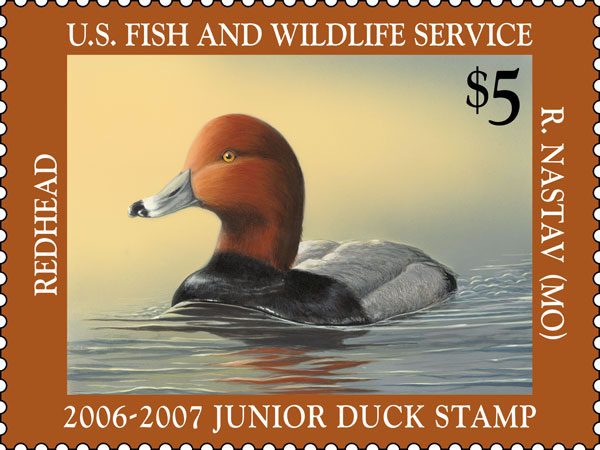
On April 27, five judges will pick the top artwork in the federal Junior Duck Stamp Design Contest. The judging will take place at the Smithsonian's National Zoological Park in Washington, D.C., making the art from students in all 50 states visible to the many tourists at the park. The event coincides with the National Zoo's Bird Fest 2007, and the winning art entry will appear on the 2007-2008 Federal Junior Duck Stamp, available for $5. Sales proceeds go toward environmental education and student awards and scholarships. Rebekah Nastav of Amoret, Mo., won the 2006 junior contest.

Marvelous Spatuletail courtship on film
American Bird Conservancy released the first-ever footage of the courtship display by a Marvelous Spatuletail, a very endangered hummingbird in the Peruvian mountains. Captured on film by Greg R. Homel of Natural Elements Productions, the hummingbird possesses just four tail feathers that end in metallic, purplish "spoons."

Labels: , , ,